
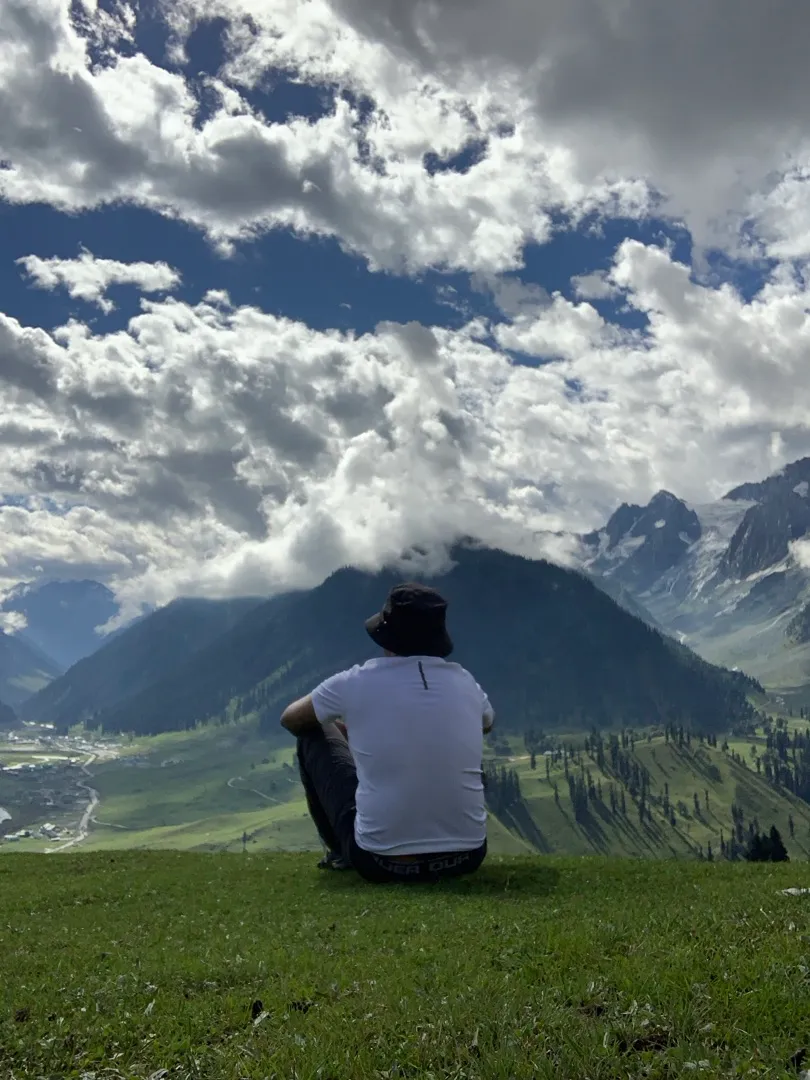
7 Lessons the Mountains Taught Me About Pace, Ego, and Leadership
For years, I lived in the illusion that stillness signalled failure and busyness equalled productivity. My days were crammed with activity, and I treated my frantic pace as a measure of strength. A crowded calendar felt like proof that I was needed, and exhaustion felt strangely reassuring. I kept burning through myself to keep a machine running that I no longer knew how to stop.
But mountains, in their brutal clarity, interrupted that pattern. Up there, none of my past achievements provided a sense of control. The altitude laid bare what was built on ego, and in the quiet hum of the peaks, I was forced to confront the fragility of my own rhythm. The urgency that once defined my pace became an anchor, weighing me down instead of propelling me forward. Every day since, Ive been unlearning the habits that once drove me, choosing instead to move at a pace that allows reflection, resilience, and most importantly, progress.
Speed is Often a Fragile Foundation
On a Himalayan trek, I had the privilege of walking with a guide who, at nearly seventy, moved with an almost deliberate calm. His steps were small but measured, and he paused often to adjust to the thin air.
In stark contrast, I watched younger climbers race ahead, only to collapse at the next ridge. By the time we reached camp, the guide was the most refreshed among us. His approach made me confront a harsh truth. In my own journey building Kudos Finance, I had confused motion with progress.
Speed had been my metric of success, but I now see that endurance, i.e., sustained, deliberate movement, is what truly drives you forward. A relentless pace blinds you to the subtle shifts beneath your feet, shifts that, if ignored, can derail you when you least expect it.
Silence is a Discipline, Not a Void
The corporate world often misleads us into believing that thinking happens in meetings and that solutions emerge through intensity. My experience in the mountains has been the opposite. Long stretches without signal or cacophony of noise expose thoughts that are usually buried under tasks and conversations. Some assumptions evaporate when no one is around to reinforce them.
Silence helps you see things clearly. When you walk for hours with no audience and no performance to maintain, your mind stops negotiating with distractions. You begin to notice what youve been carrying simply out of habit. Clarity forms slowly, not through force, but through the removal of noise that usually overwhelms it.
The High Cost of the Ego
In the professional world, we are taught to project intensity and stay visible. We project power, intensity, and importance, thinking it will validate our position. However, on the mountains, that kind of display is a waste of oxygen. The peaks reward awareness, not ego.
In my own life, I realised that my Status Tax was exorbitantly high. I was spending an incredible amount of energy on maintaining an image, rather than focusing on what truly mattered. Leadership, I now understand, involves holding a pace that allows the whole team to reach the top together. Sprinting ahead of everyone else usually just leaves you isolated at the summit.
You Cannot Force Commitment
I remember witnessing a horse at high altitude, wild and free, resisting every attempt by its keeper to bring it back to work. The horse knew exactly what it was losing: its autonomy and its own rhythm.
This moment mirrored the debates I had at the time about office culture, remote work, and leadership. That horse reminded me that people give up something significant when they choose to follow a leader. You cannot demand that kind of loyalty. It only comes when you respect the freedom and the individual rhythm of the people you lead.
Urgency is a Filter That Distorts Judgment
In the startup world, we treat every task as an emergency. This creates a sense of purpose, but in reality, it distorts the ability to think clearly. I noticed how often I shortened timelines just because the environment expected it, not because it was actually necessary.
Nature operates on a different scale. The mountains move with geological patience. Nothing is rushed, yet everything progresses. I am trying to bring that perspective back to my work. Some choices need to be made quickly, but the most important ones require space to breathe. Taking your time is often a strategic advantage.
Limits are the Foundation Of Strength
Altitude is an unforgiving auditor. If you ignore the signs of strain in your body, the mountain stops you. There is no room for negotiation. In my work life, I used to treat my limits as faults that I had to hide or overcome.
I see it differently now. Limits arent failures. In fact, recognising a limit allows you to build a system that will not break. When you are honest about your capacity, you can design structures that actually protect your energy and your judgment. Growth begins when you stop pretending that your resilience is infinite.
Presence is the Only Real Wealth
The best guides I worked with were the ones who were completely attuned to their surroundings. They noticed the changing light and the texture of the path because they were not distracted by the summit.
I have spent too much of my life living in the future. I was always thinking about the next quarter or the next milestone while I was missing the life I had already built. I am learning that success is the ability to be exactly where your feet are. If I am at home with my family, my mind needs to be there too. Otherwise, the success is just a hollow performance.
Walking at a Pace Life Can Sustain
I still find myself tangled in the old rush. There are days when my ego manages to take the lead despite my best intentions, and I have to remind myself that the treadmill is no longer where I want to be. I have lost interest in the frantic noise of the hustle.
Instead, I am choosing to be present for the life I actually built. I am learning to walk a path that respects my own rhythm and allows me to truly see the world as it moves around me. I do not have it all figured out yet, but I am moving forward with a new kind of honesty. Because every step, even the slow ones, is a step forward.
